
Rehabilitation equipment buying guide
Therapy Table and Treatment Bed Comparison
Product names such as therapy table, treatment bed, examination couch, massage table, and PT table often overlap. Buyers should compare the actual construction and workflow instead of deciding from the name alone.
Published and reviewed:
Quick answer
Choose a therapy table by intended procedure, transfer access, minimum and maximum height, number of adjustable sections, surface dimensions, rated capacity, controls, electrical requirements, mobility, cleaning, and maintenance.
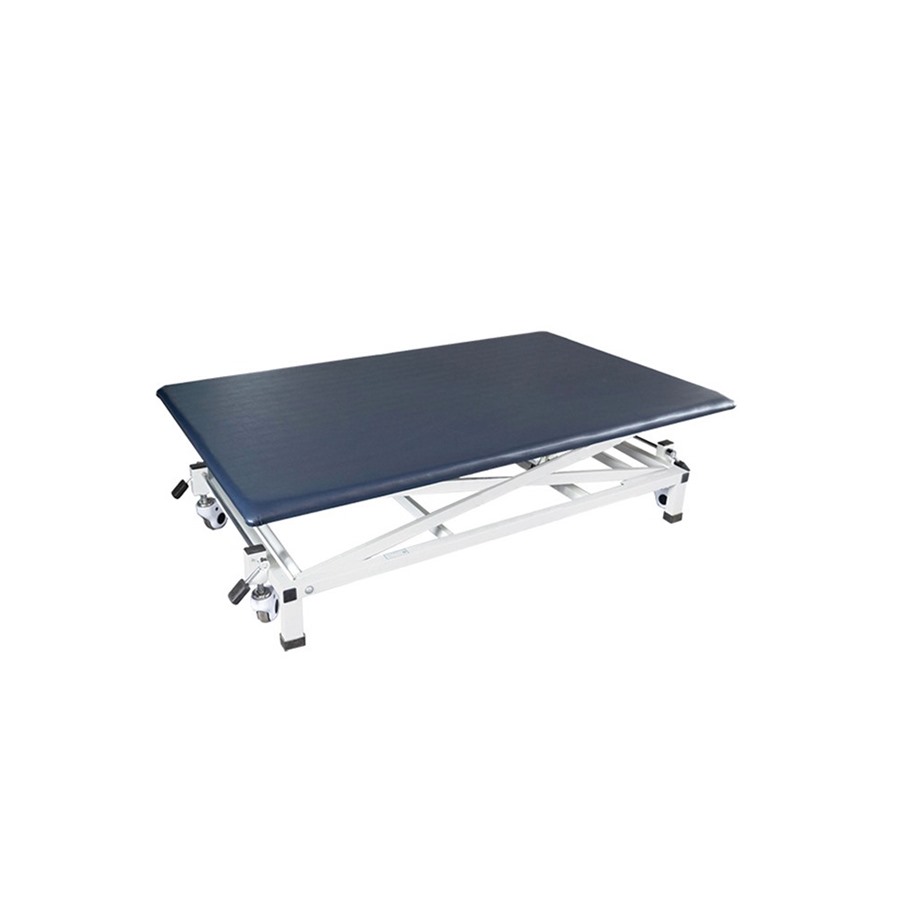
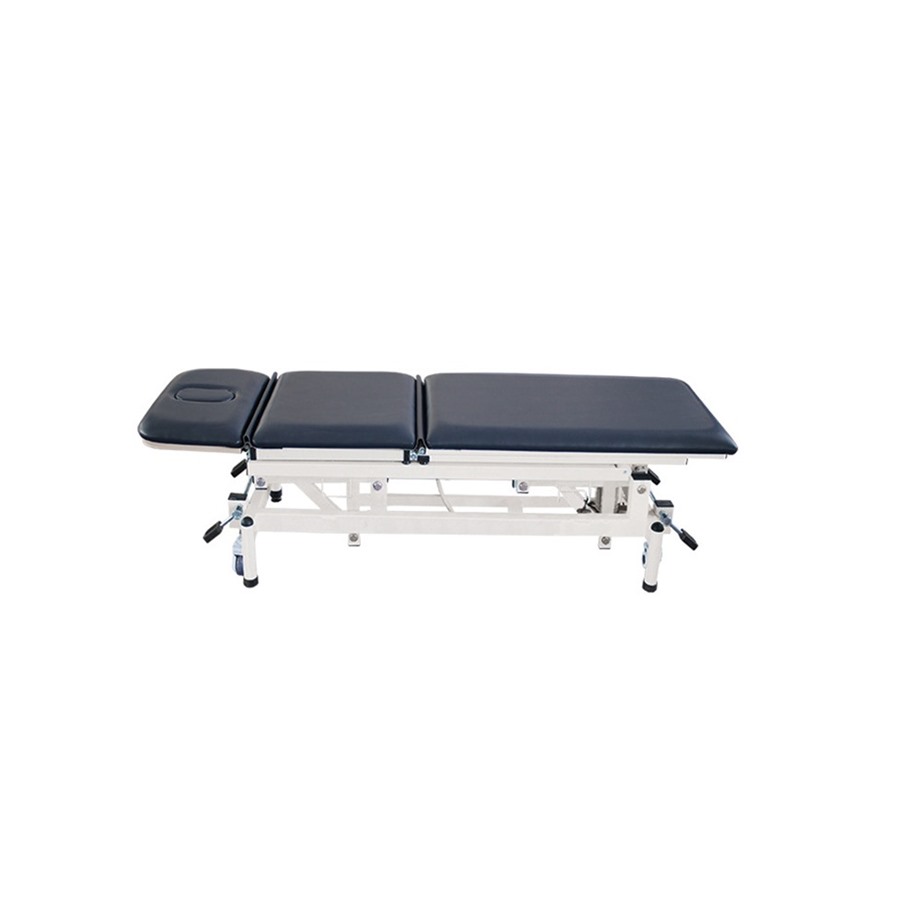
Define the work performed on the table
List assessment, manual therapy, exercise, transfer practice, positioning, massage, or supervised tilt activities. This determines whether a flat, multi-section, height-adjustable, or tilt configuration is appropriate.
Check height and access
Compare minimum height for transfers, maximum working height, clearance below the frame, side access, caster system, control location, and space for assistants or lifting equipment.
Compare sections and controls
More sections create more positioning options but also add controls, moving parts, and maintenance. Verify adjustment angles, head or leg sections, face opening, arm supports, and locking method.
Plan electrical and logistics details
For powered tables, specify voltage, frequency, and plug. Request packed dimensions, gross weight, assembly requirements, protection method, warranty, and replacement-part support.
Comparison table
| Item | Primary role | What to verify |
|---|---|---|
| Fixed-height table | General treatment and assessment | Simple structure, dimensions, rated load, transfer height |
| Electric height-adjustable table | Variable transfers and working height | Height range, controls, voltage, actuator access |
| Multi-section table | Additional treatment positions | Section count, angles, controls, upholstery, accessories |
| Tilt table | Controlled tilt-position workflow | Tilt range, straps, footboard, height, power, rated load |
Information to prepare
- Intended treatments and room workflow
- Surface dimensions, rated load, and height range
- Sections, angles, controls, accessories, and casters
- Voltage, frequency, plug, and labeling language
- Packing, assembly, warranty, manuals, and document status
Frequently asked questions
Is a massage table suitable for physiotherapy?
It depends on dimensions, stability, height, load, sections, access, and intended procedures. Compare specifications rather than the marketing name.
Is a wider table always better?
No. Width can improve usable surface area but may reduce therapist reach or consume circulation space. Match it to the procedure and room.
When should a clinic choose electric height adjustment?
Consider it when variable transfer and working heights are important and the clinic can support the electrical and maintenance requirements.
What affects shipping cost most?
Packed volume, gross weight, quantity, packaging method, destination, and delivery terms are major factors. Ask for packed data before comparing freight.
Definition
A therapy table or treatment bed is a working surface for assessment, manual therapy, exercise, transfers, and positioning. Buyers should compare the practical configuration: access around the table, height adjustment, section layout, patient transfer needs, and the room footprint.
Numeric facts to include in the enquiry
- Identify 1 main therapy use and the expected user group.
- Request 1 exact model, table dimensions, height range, and listed safe working load.
- Confirm 3 fulfilment details: package size, gross weight, and delivery or installation scope.
Procurement steps
- Measure the treatment room and leave space for safe transfers and therapist movement.
- Decide which adjustments are essential for the planned treatments before comparing upholstery or colour options.
- Ask each supplier to state what is included, including side rails, foot switches, paper-roll holders, and freight terms.
- Compare quotations using the same dimensions, functions, delivery terms, and after-sales support scope.
Buyer FAQ
Should a clinic choose a fixed or electric treatment table?
That depends on the transfer workflow, the range of treatments, and whether frequent height adjustment is needed. A fixed table can suit simpler rooms; electric adjustment can help where set-up changes often.
Can two tables with similar dimensions have different quoted scope?
Yes. Sections, controls, accessories, upholstery, freight, installation, and support can differ. Compare the written configuration rather than the product title alone.