
Rehabilitation equipment buying guide
Occupational Therapy Equipment List for Clinics
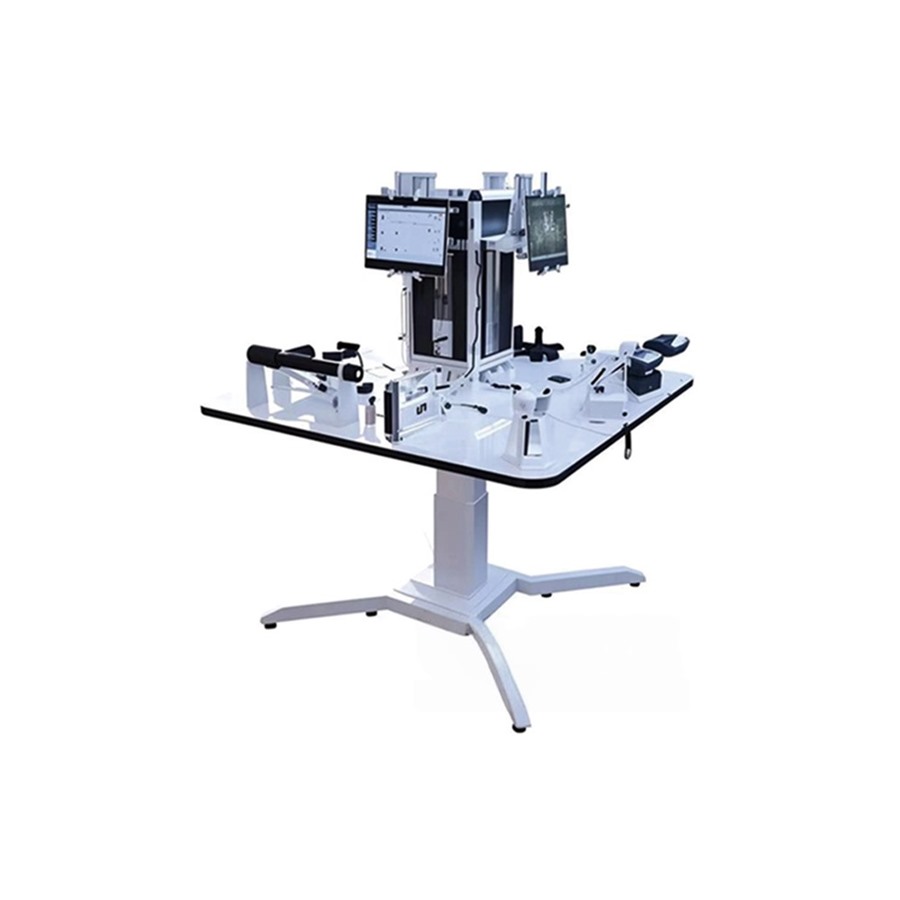
An occupational therapy equipment list is most useful when every item is connected to a planned activity. Buying many small tools without a room workflow can create storage problems while leaving gaps in work surfaces, access, and frequently used core equipment.
Published and reviewed:
Quick answer
Start with adjustable work surfaces and wheelchair access, then group equipment by upper-limb movement, hand function, coordination, task practice, cognition, and daily activities. Select tools at several difficulty levels and plan storage and cleaning before ordering.
Map equipment to activities
List the activities the department will deliver and the patient groups served. Connect each proposed item to an actual task, therapist workflow, and storage location.
Protect access and working posture
Check tabletop height, wheelchair knee clearance, reach distance, seated support, therapist position, handedness, and whether tools need angle or height adjustment.
Use graded sets instead of duplicates
For pegboards, coordination tools, and hand activities, compare component size, complexity, resistance, and visual or cognitive demand. A graded set is usually more useful than several nearly identical tools.
Plan storage, cleaning, and inventory
Small pieces need labeled storage and an inventory method. Review surface materials, cleaning instructions, replaceable components, and how incomplete sets will be handled.
Comparison table
| Item | Primary role | What to verify |
|---|---|---|
| Adjustable OT table | Work surface and upper-limb activity | Height, wheelchair clearance, work area, accessories |
| Pegboard set | Fine-motor and coordination tasks | Peg size, board angle, difficulty, storage |
| Upper-limb trainer | Repeated arm movement | Range, resistance, user positioning, footprint |
| Hand activity tools | Grip, dexterity, and task practice | Difficulty levels, parts, cleaning, storage |
Information to prepare
- Patient groups and planned OT activities
- Wheelchair clearance and adjustable work surfaces
- Core tools plus graded difficulty levels
- Storage, cleaning, and small-component inventory
- Exact models, quantities, replacement parts, and packing
Frequently asked questions
What are the essentials for a small OT room?
Prioritize accessible work surfaces, frequently used hand and coordination tools, safe storage, and equipment linked to the clinic's main patient groups.
Are software-assisted tables necessary?
They may support specific workflows, but software, language, licensing, maintenance, and staff use should be evaluated before choosing them over simpler equipment.
How should pediatric and adult OT tools differ?
Review component size, working height, reach, supports, activity difficulty, supervision, and instructions for the intended users.
Can OT tools ship as part of a clinic package?
Yes. Use a detailed item and quantity list so small components, larger tables, packing, and replacements remain identifiable.
Definition
Occupational therapy equipment is selected around the activities a therapy team plans to practise: reaching, grasping, transfers, seated work, upper-limb use, sensory-motor tasks, or daily-living practice. A useful list starts with the clinical workflow, rather than a catalogue of unrelated items.
Numeric facts to include in the enquiry
- Name 1 planned therapy area and the main user group it will serve.
- For every shortlisted item, request 1 exact model, 1 quantity, and the main dimensions.
- Confirm 3 delivery details: package count, gross weight, and destination or unloading requirements.
Procurement steps
- Map the activities, therapist supervision points, and storage space in the room.
- Separate essential equipment from accessories that can be added later.
- Ask suppliers to quote like-for-like configurations, including installation and training support where needed.
- Check the final list against room access, cleaning requirements, and the expected programme volume.
Buyer FAQ
Can one occupational therapy equipment list suit every clinic?
No. A paediatric sensory-motor room, a stroke unit, and an adult outpatient clinic have different activity goals, room constraints, and supervision needs.
Should accessories be quoted with the main equipment?
Yes. List the included accessories separately so the quoted configuration is clear and comparable across suppliers.