
Rehabilitation equipment buying guide
Gait Training Equipment for Rehabilitation Clinics: Product Types and Room Needs
A practical gait-training room starts with support level, user group, therapist access, and the complete delivery route—not with a single product name.
Published and reviewed:
Quick answer
Compare body-weight-support gait trainers, parallel bars, training stairs, and walkers by the support they provide, adjustment range, footprint, therapist access, and user group. Measure the treatment room and delivery route before requesting a quotation.
Choose equipment by workflow
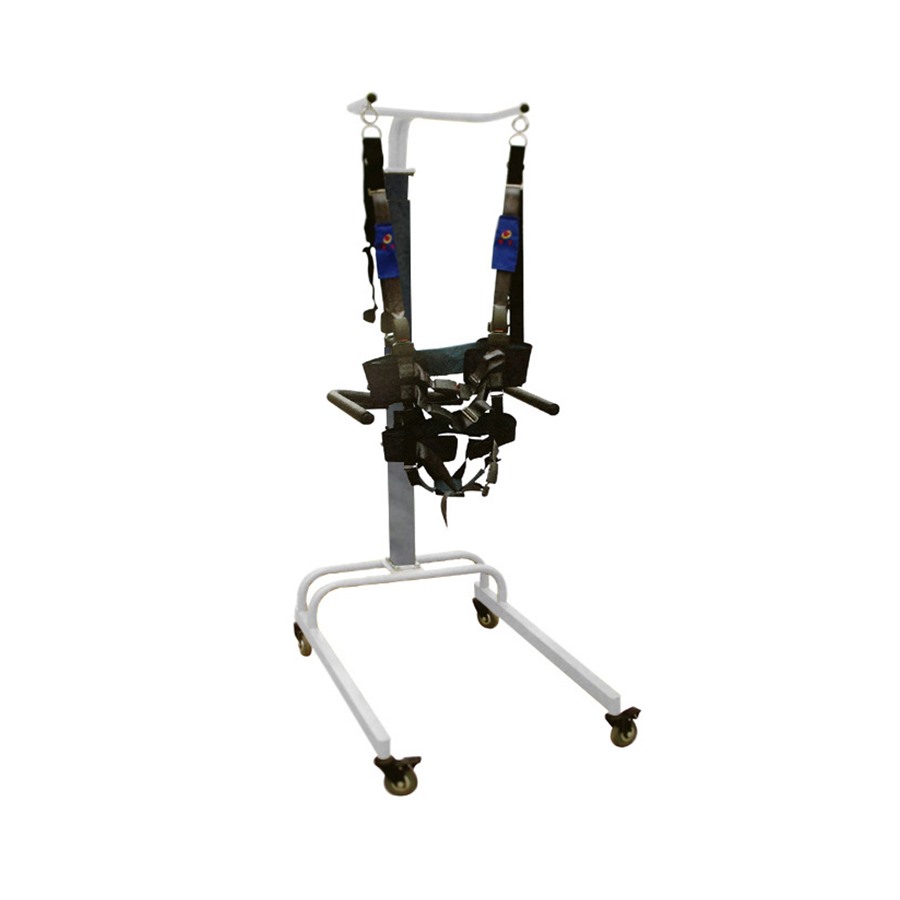
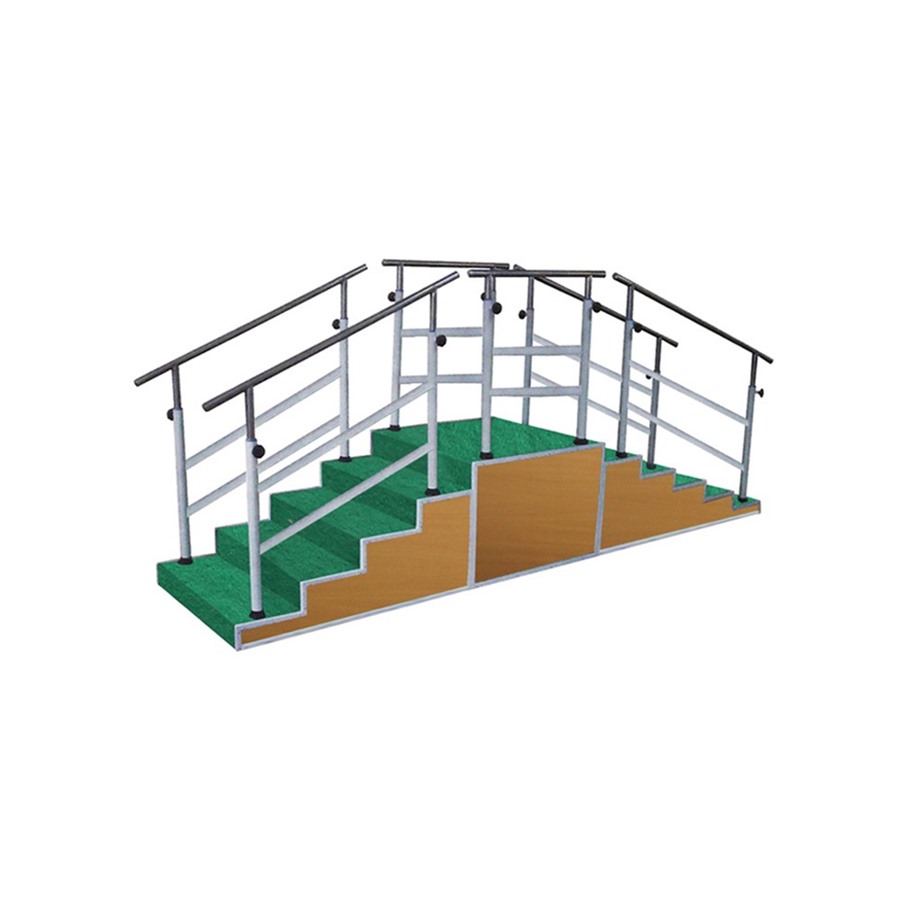
A body-weight-support gait trainer may suit supervised supported stepping. Parallel bars provide a fixed walking lane, while training stairs address supervised step practice. Walkers may support a different stage of overground mobility.
Measure space and access
Record usable floor area, doorway width, corridor and lift dimensions, turning clearance, therapist standing space, and storage. Include space for transfers, assembly, cleaning, and safe access around the equipment.
Compare before ordering
| Equipment | Compare |
|---|---|
| Gait trainer | Support configuration, height range, harness, footprint, and transfer access |
| Parallel bars | Length, width, handrail adjustment, ramp, and base stability |
| Training stairs | Step arrangement, platform, handrails, footprint, and floor access |
| Walker | Height, width, wheels, brakes, folding, and user access |
What to confirm before purchase
Confirm the exact model, standard and optional accessories, dimensions, adjustment range, rated capacity, packing, electrical details where applicable, document status, and destination-market requirements.
Frequently asked questions
How should a clinic begin the shortlist?
Start with the user group, therapy program, room workflow, and delivery constraints, then compare exact models and configurations.
Should similar equipment be treated as interchangeable?
No. Adjustment range, access, accessories, dimensions, and document status can differ between models and must be confirmed.
What should be confirmed before ordering?
Confirm the exact model, configuration, quantity, dimensions, packing, electrical requirements, documents, and destination-market requirements.
Definition
A gait-training room is a planned therapy area, not simply a collection of walking devices. Equipment selection should consider the programme, transfer route, therapist access, room circulation, and facility support.
Numeric facts to include in the inquiry
- Identify 1 planned room and 1 user group or programme.
- For each shortlisted item, request 1 exact model and 1 quantity.
- Record 4 logistics fields: package count, packed dimensions, gross weight, and delivery term.
Procurement steps
- Map the intended training, transfer, and supervision areas.
- Shortlist equipment types by workflow rather than product name alone.
- Check room footprint, clearance, power where relevant, and delivery access.
- Compare written quotations with the same configuration and support scope.
Buyer FAQ
Can every gait device be used in the same room plan?
No. Footprint, transfer needs, therapist access, and safety procedures differ.
Does this guide prescribe a treatment programme?
No. It supports purchasing preparation; qualified practitioners define treatment and patient suitability.